






Below are some frequently asked questions about our Gene Synthesis services. Should you have any questions other than listed below, feel free to contact us at [email protected] and we will be happy to clear your thoughts.

- 1. What are the deliverables?
- 2. How would I know the status of my genes?
- 3. What is the standard vector for Bio Basic gene synthesis?
- 4. Can Bio Basic subclone the gene into the vector of my choice?
- 5. What kinds of payments do you accept?
- 6. Do you provide protein expression services for codon optimized genes?
- 7. Are your genes sequencing verified?
- 8. What are non-standard sequences?
- 9. How do I ship my own vectors to NBS for cloning?
- 10. Are the genes purified enough for transfection?
- 11. How long can I store my lyophlilized gene?
1
What are the deliverables?
Generally, the deliverables for your synthetic gene of interest will consist of the following:
- 2-4ug of lyophilized DNA.
- Sequence chromatogram tracefiles.
- Sequencing Results.
- Final plasmid sequence.
- Alignment files.
- Reconstitution, re-plating and bacteria growth instructions.
- Vector information.
- Gene Synthesis Summary Report (not including restriction digestion data, unless requested).
Please note that we keep stock of final plasmid deliverables for 3 months, unless otherwise requested.
2
How would I know the status of my genes?
We have a simple Gene Project Tracker portal where you can use your designated BBI ID(s) to track your project progress.

3
What is the standard vector for Bio Basic gene synthesis?
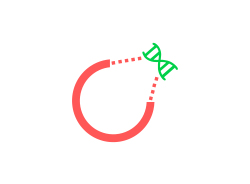
Bio Basic standard cloning vectors include pUC57-Amp, pUC57-Kan, pUC-SP and pBluescript . In general, synthetic genes will be cloned via Blunt of the standard vector, or any cloning sites you desired. Click here for a list and details on our cloning vectors.
4
Can Bio Basic subclone the gene into the vector of my choice?
Yes, Bio Basic can subclone the synthetic gene into the vector of your choice at an affordable additional cost. The vector (commercial vector or non-commercial vector) must be provided to us with a full-length sequence and other requested info.

5
What kinds of payments do you accept?
Bio Basic accepts credit cards (Visa, MasterCard, American Express), and bank transfer. You may send us a PO if you are an academic institution. For certain orders, Bio Basic may require a deposit or payment in advance

6
Do you provide protein expression services for codon-optimised genes?
Yes! Bio Basic provides protein expression and purification services using bacteria, yeast, baculovirus, and mammalian cell systems. For more information, please visit our Protein Production service page.
7
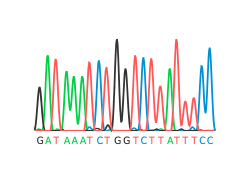
Are your genes sequencing verified?
Yes. The sequences of genes synthesized by us are confirmed by DNA sequencing, and 100% guaranteed.
8
What are non-standard sequences?
Generally, it is more difficult to synthesize sequences that have:
- i) GC content > 70% or < 40% in regions of at least 30 base pairs or the whole sequence (generally difficult to synthesize sequences that have either too high or low GC content; standard sequences typically have a GC content of 50%).
- ii) Long sequence repeats (>12 bp) that exist in a high frequency (interval between repeats < 100bp), e.g. internal repeats, direct repeats or inverted repeats.
- iii) Homopolymers longer than 15 bp.
- iv) Sequences that have a high similarity with toxic genes.

Please click here for instructions on how to use the portal.
9
How do I ship my own vectors to NBS for cloning?
Please send two tubes each containing 4.0ug of each plasmid DNA, with your project number as a memo, to
NBS Biologicals Ltd.
14 Tower Square
Huntingdon
Cambridgeshire
PE29 7DT
Once shipping has been arranged, please inform [email protected] of the tracking number.
Please contact us at [email protected] if you have any questions or concerns regarding shipping.

10
Are the genes purified enough for transfection?
All our genes undergo column-based purification and as a result, may be suitable for transfection.
If further purification is needed to ensure near-complete removeal of endotoxin, please request our endotxin-free prep service.
11
How long can I store my lyophlilized gene?
Up to 6 months at room temperature, 1 year if refrigerated (2 to 8°C) and up to 2 years if frozen (-20 to -30°C).