




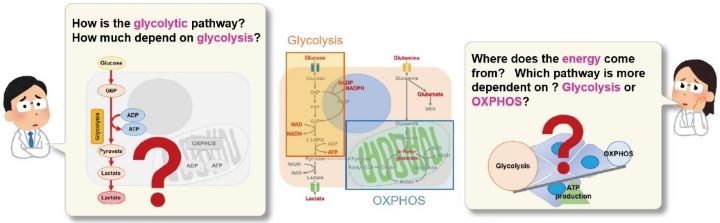
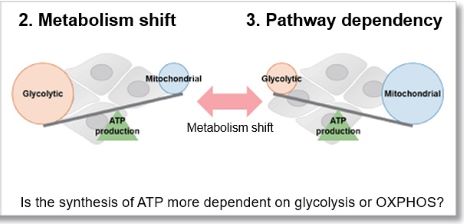
Many cancer cells produce ATP through energy metabolism that depends on the glycolytic pathway. On the other hand, it has been recently reported that cancer cells whose glycolytic pathway is suppressed survive by shifting their energy metabolism to oxidative phosphorylation(OXPHOS). These phenomena has attracted much attention because it will not only help elucidate the mechanisms of anticancer drugs but also lead to the development of therapeutic strategies in various diseases including aging and neurodegenerative disorders.
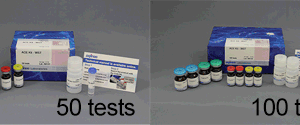
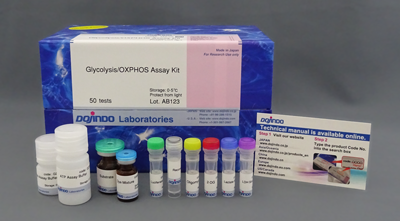
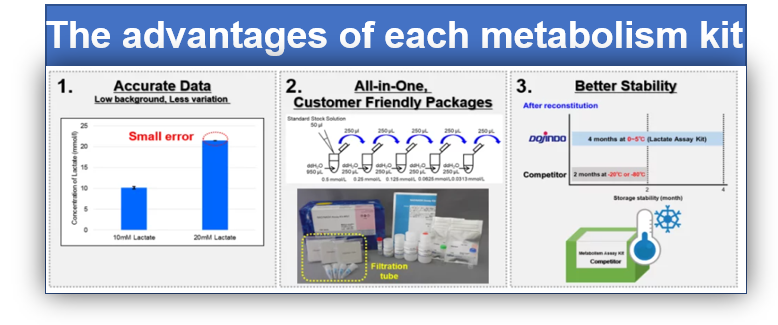
This kit evaluates glycolytic capacity, metabolism shift, and whether cells rely on the glycolytic system or oxidative phosphorylation for energy production using a plate reader. This ready-to-use kit includes all the reagents acquired.

Technical info
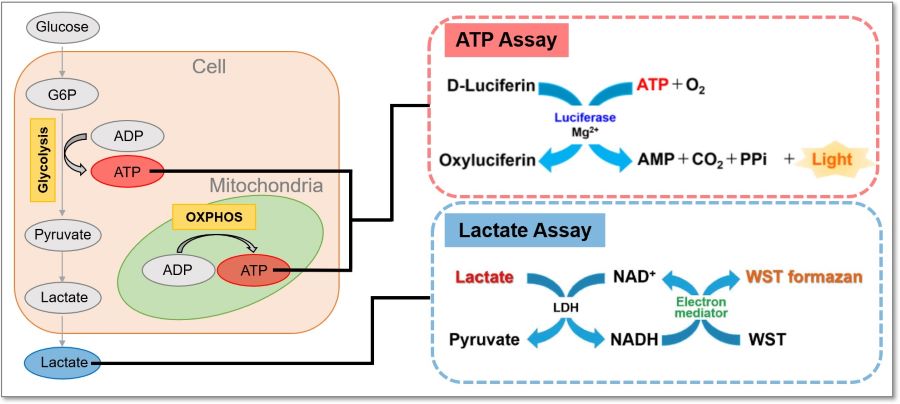
This kit measures the concentration of intracellular adenosine triphosphate (ATP) by the luciferase luminescence method and the amount of lactate released from cells by the absorbance method using water soluble tetrazolium (WST) formazan. Using the inhibitors contained in this kit, it is possible to evaluate a shift in the intracellular metabolism between glycolysis and oxidative phosphorylation (OXPHOS). In addition, this kit can be used with microplates.
Three Applications
The inhibition of ATP synthesis via OXPHOS by oligomycin or inhibition of ATP synthesis via glycolysis by 2-deoxy-D-glucose (2-DG) can be determined by measuring changes in the amounts of ATP (luminescence value) and lactate (absorbance value), respectively, which can be used to evaluate the following three pathways.
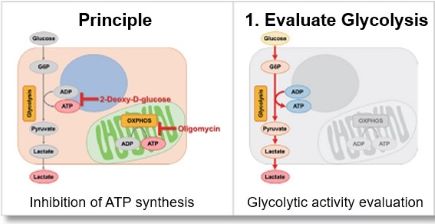
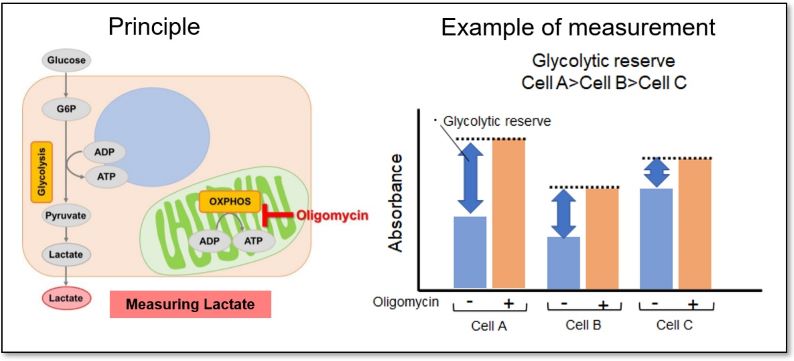
Evaluation 1: Glycolytic capacity
Oligomycin is used to inhibit ATP synthesis by OXPHOS, and then the potential of the glycolytic pathway using lactate production as an indicator can be evaluated.
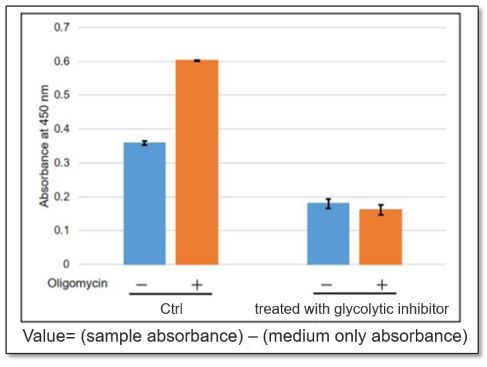
<Application Data>
The glycolytic capacity of HeLa cells treated with a glycolytic inhibitor (2-DG concentration: 2 mmol/l) was compared with that of untreated HeLa cells (control). When ATP synthesis by OXPHOS was inhibited by oligomycin, the glycolytic pathway was enhanced in the control cells, but not in cells in which the glycolytic pathway was inhibited.
*For more details, please refer to General Protocol ① (Analysis of Cellular Glycolytic Capacity) on page 3 of the manual.
Evaluation 2: Metabolism shift
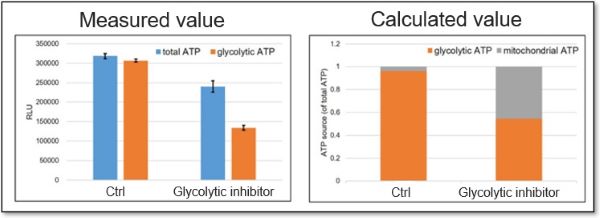
Measuring the ATP levels in oligomycin-treated cells and control cells can be used to calculate the amount of ATP synthesized by mitochondria, which is an indicator of a shift in cellular metabolism.
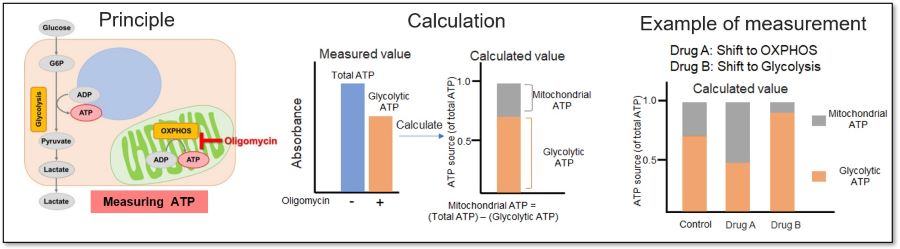
<Application Data>
We evaluated whether treatment with a glycolytic inhibitor (2-DG concentration: 2 mmol/l) would cause a metabolic shift in HeLa cells. The ATP production capacity of the control cell group was dependent on the glycolytic pathway, whereas inhibition of the glycolytic pathway in HeLa cells shifted ATP production from glycolysis to OXPHOS and increased ATP production in the mitochondria.
*For more details, please refer to General Protocol ② (Analysis of Metabolism Shift) on page 5 of the manual.
Evaluation 3: Metabolic pathway dependence
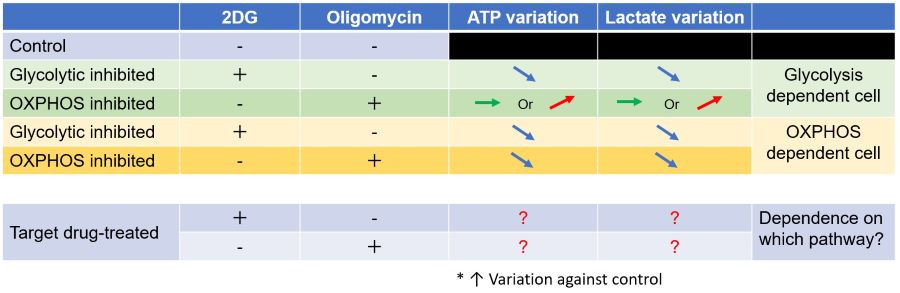
Combining methods (1) and (2) can be used to measure the metabolic pathway dependency of cells.
Cells are treated with oligomycin or 2-DG to inhibit OXPHOS or ATP synthesis in the glycolytic pathway, and the amounts of ATP and lactate production are measured, respectively. Changes in the amount of ATP can be used to determine the efficiency of energy production, and changes in the amount of lactate produced can be used to determine changes in glycolytic capacity and evaluate whether cells are dependent on glycolysis or OXPHOS.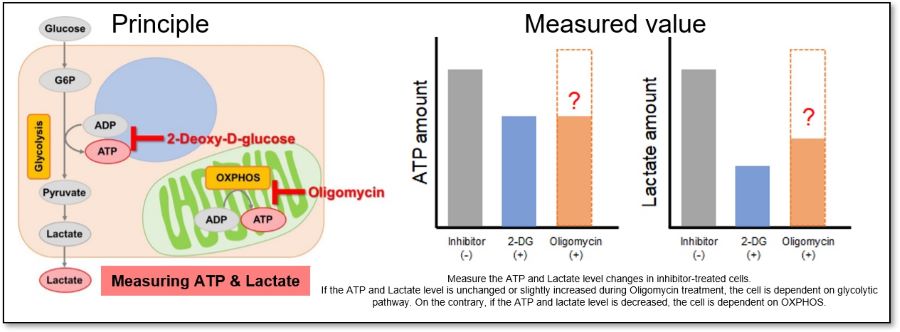
<Application Data>
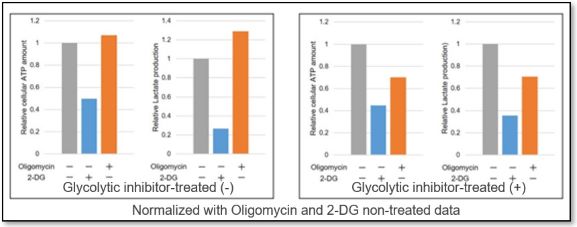
We evaluated the metabolic pathway dependence of HeLa cells treated with a glycolytic inhibitor (2-DG concentration: 2 mmol/l).
ATP levels in the cells without glycolytic system inhibition treatment were markedly reduced by 2-DG treatment but were unchanged by oligomycin treatment. The amount of lactate production was increased by oligomycin treatment. This indicates that metabolism in HeLa cells in the absence of glycolytic inhibitor treatment is highly dependent on the glycolytic system.
In contrast, oligomycin treatment did not increase lactate production in the glycolytic inhibitor-treated cells, and ATP levels were markedly reduced by oligomycin treatment. In addition, the amount of ATP was decreased significantly after oligomycin treatment, indicating that the metabolism of glycolysis-inhibited HeLa cells depended on OXPHOS.
*For more details, please refer to General Protocol ③ (Analysis of Metabolic Pathway Dependence) on page 8 of the manual.
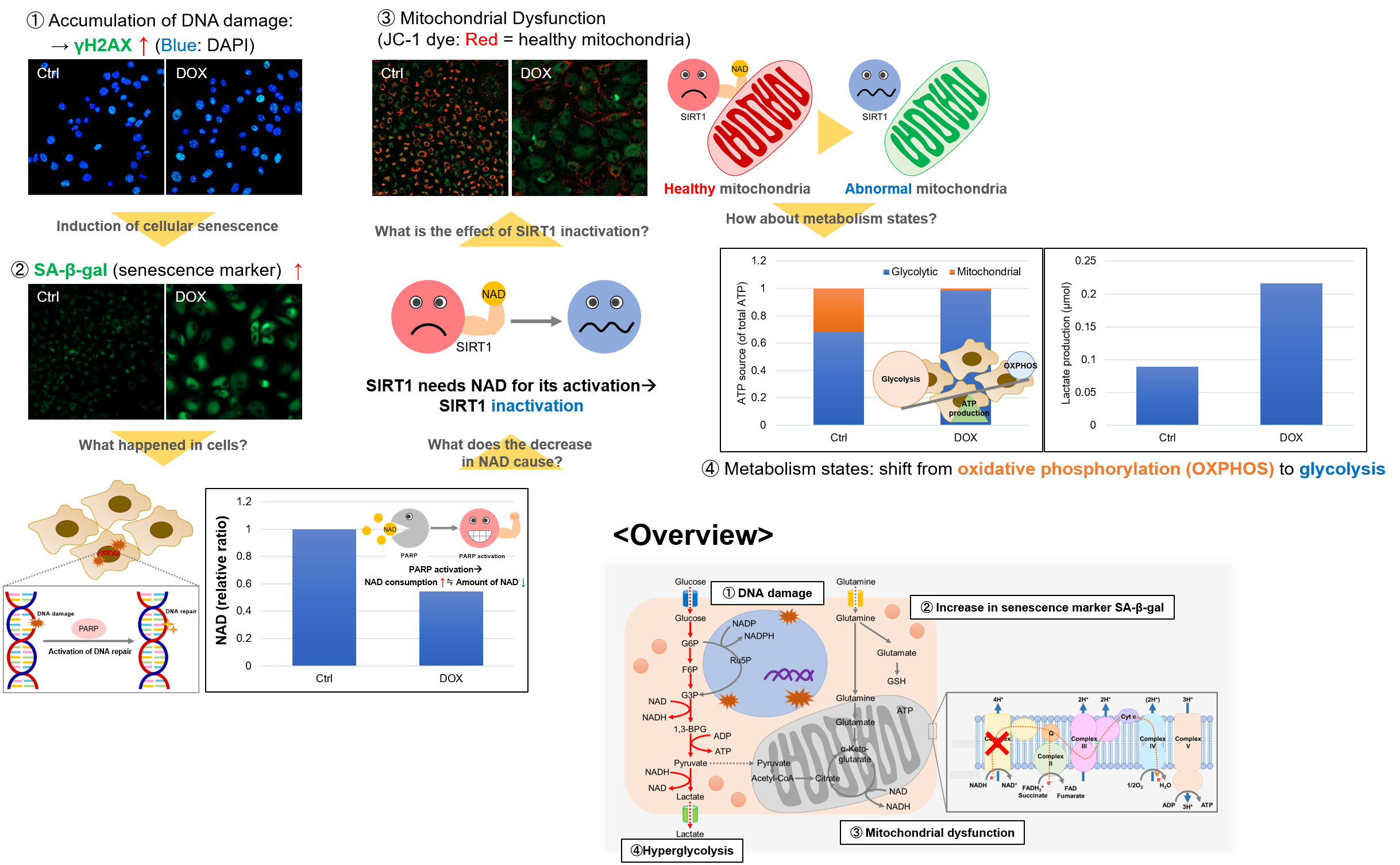
Experiment Example: Cellular Senescence with Metabolic shift
NAD(+) levels decline during the aging process, causing defects in nuclear and mitochondrial functions and resulting in many age-associated pathologies*. Here, we try to redemonstrate this phenomenon in the doxorubicin (DOX)-induced cellular senescence model with a comprehensive analysis of our products.
*S. Imai, et al., Trends Cell Biol, 2014, 24, 464-471
Related Products
| Category | Product | Unit | SKU |
|---|---|---|---|
| Cellular Metabolism | NAD/NADH Assay Kit-WST | 100 tests | N509-10 |
| Lactate Assay Kit-WST | 50 / 200 tests | L256-10 / L256-20 | |
| Glycolysis/OXPHOS Assay Kit NEW | 50 tests | G270-10 | |
| Cellular Senescence Detection | Cellular Senescence Detection Kit – SPiDER-βGal | 1 / 3 / 10 plates | SG04-01 / SG04-03 / SG04-10 |
| Mitochondrial Membrane Potential | JC-1 MitoMP Detection Kit | 10 set | MT09-10 |
Application Data: Comparison of metabolic pathway dependence in different cell lines
Many cancer cells produce ATP through the glycolytic pathway. On the other hand, it has been recently reported that cancer cells whose glycolytic pathway is suppressed survive by shifting their energy metabolism to OXPHOS by enhancing mitochondrial function, and the dependency of metabolic pathways differs depending on cell lines.
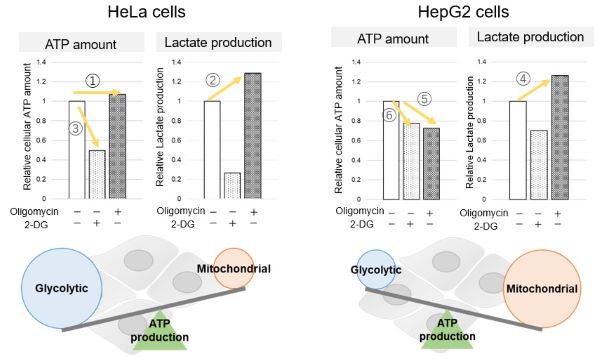
The dependence of OXPHOS and Glycolysis in two types of cancer cells, HeLa and HepG2, were compared based on Lactate production, ATP levels, and OCR values.
<Evaluation by Lactate production and ATP levels>
We confirmed the changes in ATP and Lactate production when ATP synthesis by OXPHOS was inhibited by Oligomycin stimulation and by 2-Deoxy-D-glucose (2-DG) in the glycolytic pathway. The results showed that HeLa cells depend on Glycolysis and HepG2 cells depend on OXPHOS to synthesize ATP.
*Please refer to the “Supplementary information on technology and products used” section on the right for additional information on the results.
Evaluated with: Glycolysis/OXPHOS Assay Kit (Code: G270)
<Evaluation by OCR value>
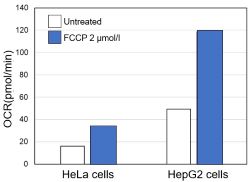
Using the same number of cells, we measured the OCR value when cellular oxygen consumption was promoted by stimulating the cells with FCCP, a mitochondrial uncoupling agent. The results showed that HepG2 cells had higher OCR values than HeLa cells, suggesting a greater dependence on OXPHOS, correlating with the results obtained from ATP level and Lactate production.
〈Experimental Condtions〉
Cell line: HeLa, HepG2
Cell number: 5×10⁴ cells/well
Stimulation: FCCP
Concentration: 2 μmol/l
Evaluated with: Extracellular OCR Plate Assay Kit (Code: E297)