








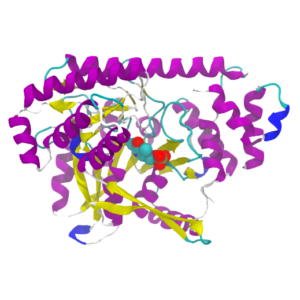
MIG, CXCL9, human: CXCL9, a member of the α subfamily of chemokines that lack the ELR domain, was initially identified as a lymphokine-activated gene in mouse macrophages. The CXCL9 gene is induced in macrophages and in primary glial cells of the central nervous system specifically in response to IFN-γ. CXCL9 has been shown to be a chemoattractant for activated T-lymphocytes and TIL but not for neutrophils or monocytes. The human CXCL9 cDNA encodes a 125 amino acid residue precursor protein with a 22 amino acid residue signal peptide that is cleaved to yield a 103 amino acid residue mature protein. CXCL9 has an extended carboxy-terminus containing greater than 50% basic amino acid residues and is larger than most other chemokines. A chemokine receptor (CXCR3) specific for CXCL9 and IP-10 has recently been cloned and shown to be highly expressed in IL-2-activated T-lymphocytes. UnitProt ID: Q07325

£119.00 exc. VAT
5ug
| CAS | |
|---|---|
| Grade | |
| HS Code | 2937.19.0000 |
| Manufacturer | Bio Basic |
| Pack Size | 5ug |
| Shipping Conditions | ICE |
| Sterile | yes |
| Storage Conditions | (-15 to -20)C |
| UNSPSC Category | Other Cytokines and Chemokines |
| UNSPSC Code | 41116127 |
| DG | |
| Hazard Class | |
| Hazard UN |